CHISPA
Technical data
Programme: Gastronomic restaurant
Scope: preliminary design, detailed design and on-site project management.
Surface area: 212m²
Client: Chispa Bistró
Address: Calle Barquillo, 8, Madrid
Date: August 2022
Study
Architects: Néstor Montenegro Mateos / Marta Menéndez San Juan
Collaborators: Juan Rol / Francesca Maggioni / Arantza Bravo / Paula González
External
Kitchen: Ibertrasa
Lighting: Light Studio / Insight Luz y Control
Construction company: Grupo Spin
Photography: Javier de Paz García
The starting conditions for the design of the Chispa Bistró restaurant are strongly influenced by the narrative and the gastronomic experience presented by the chefs, as well as by the spatial characteristics of the premises. Juan D’Onofrio and Gabriel Sodré, two chefs with international experience, were clear that their restaurant should focus on a cuisine in view, directly related to the client and inserted in a room with an honest character and free of ornamentation.
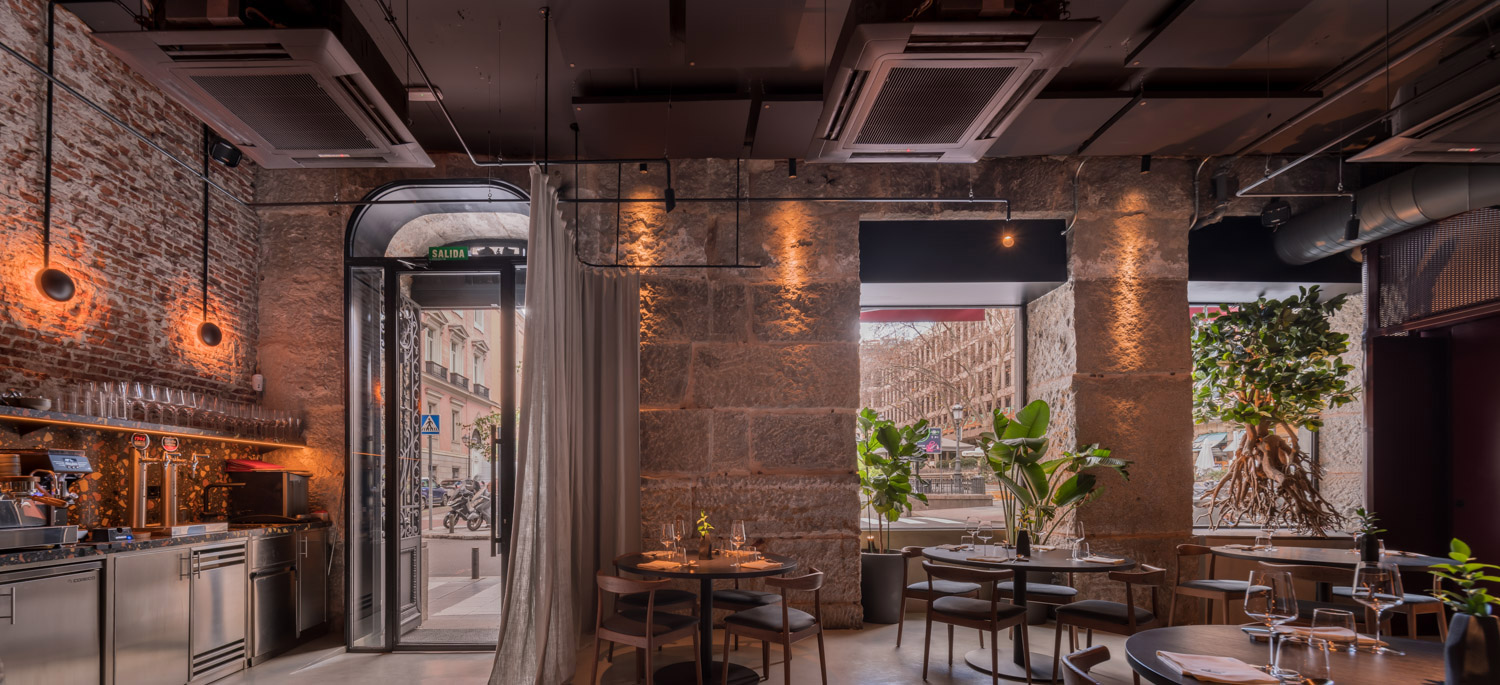
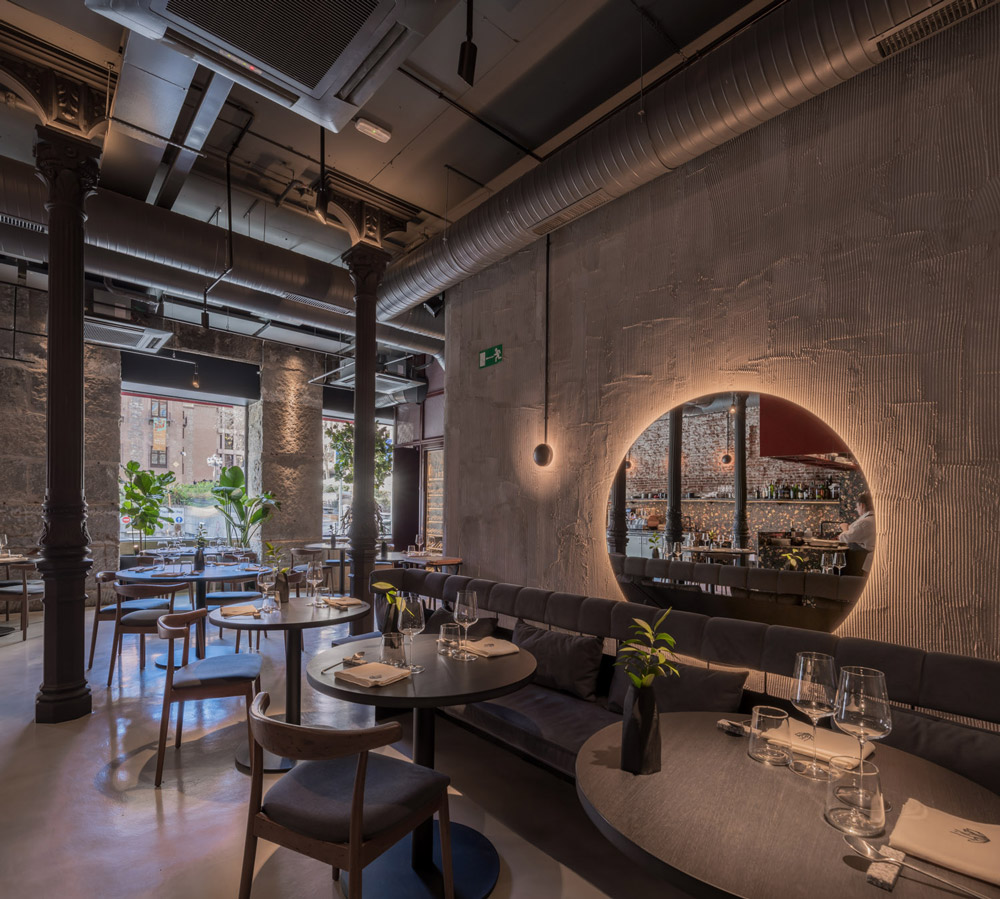
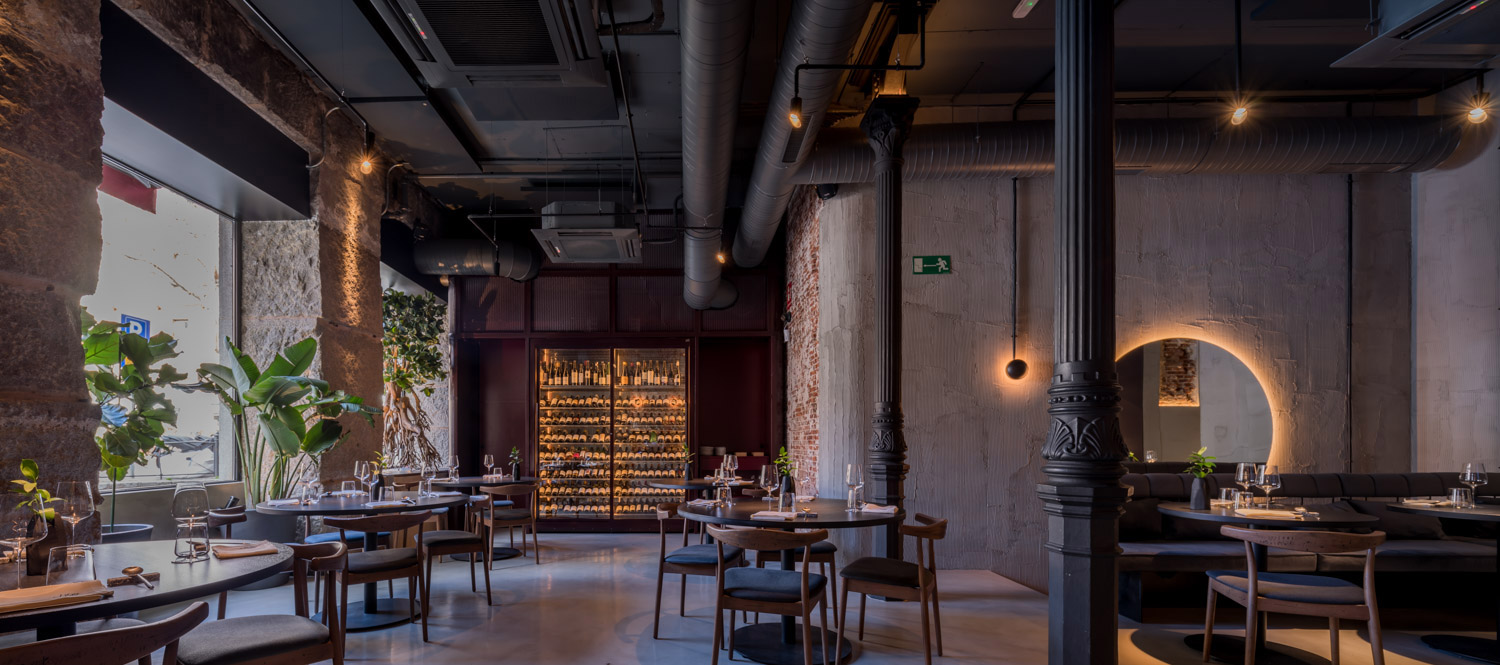
The premises are located in one of Madrid’s trendiest neighbourhoods, on the ground floor of a listed building dating from 1907. A monumental entrance door, high ceilings, cast-iron pillars and brick walls on a base of large granite blocks.
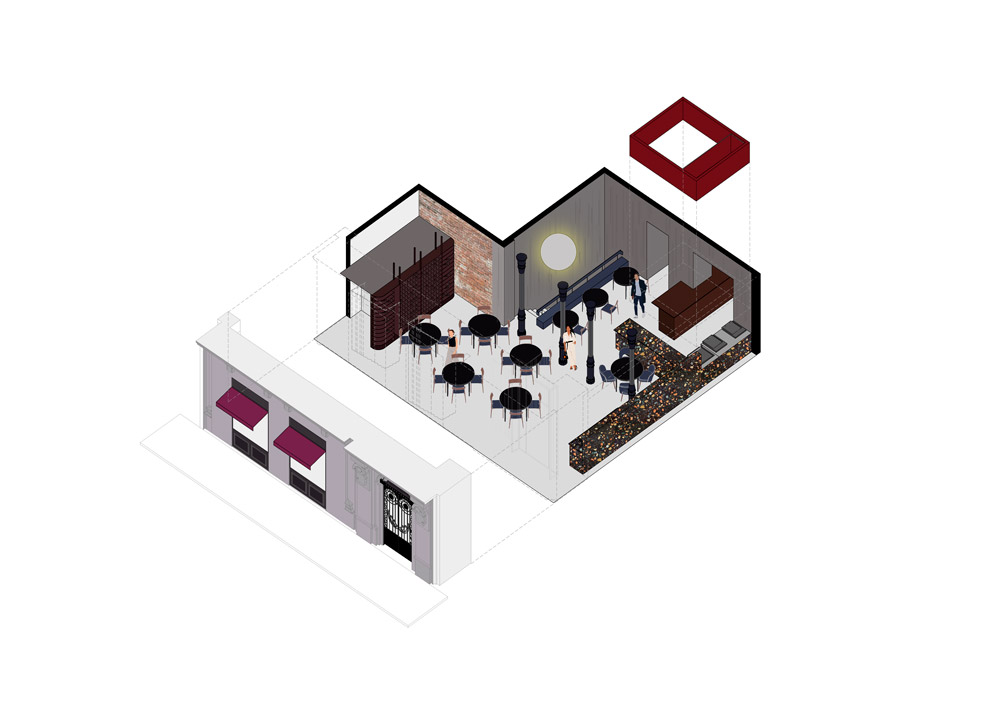
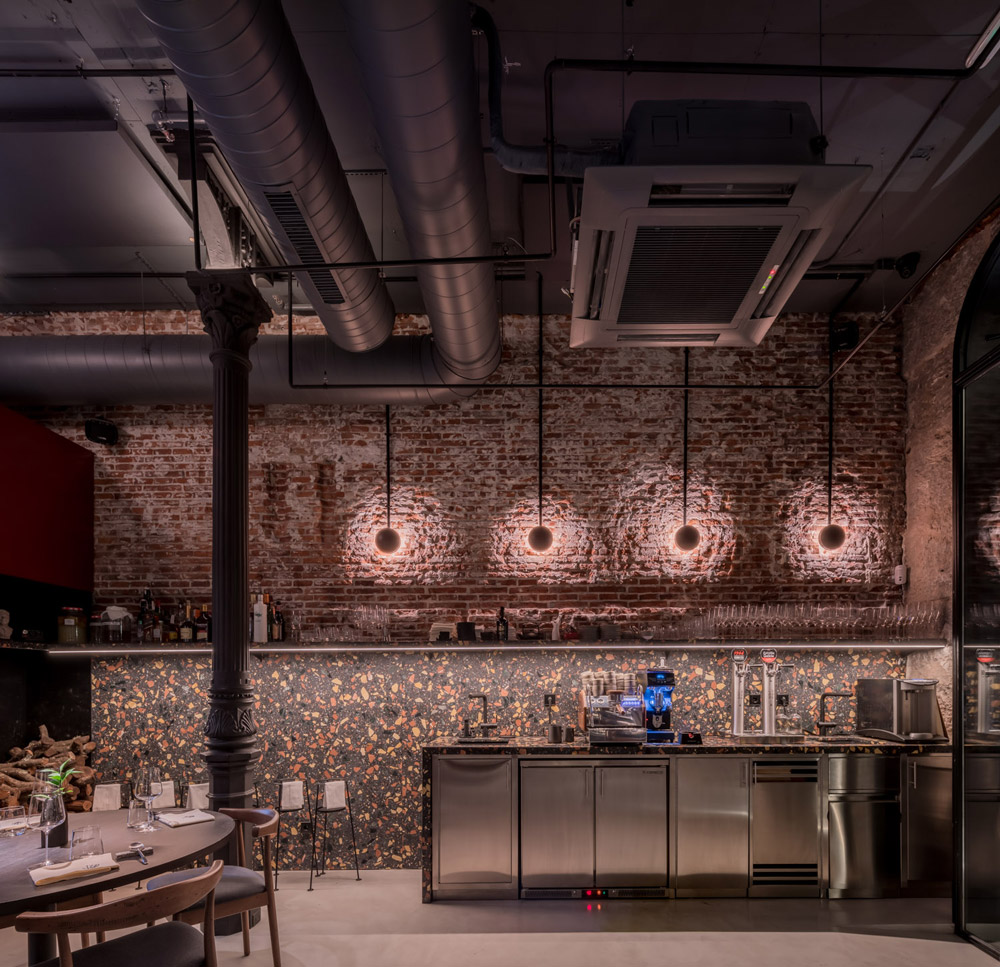
For the living room and kitchen area we worked with the idea of completely stripping the space down to what we identify as the skin. We eliminated everything superfluous until we found certain textures, leaving materials such as granite, brick, mortar or the original ceilings in view. Imperfect surfaces, marked by previous uses, on which we act with small gestures that are superimposed like layers capable of transforming the look and the space.
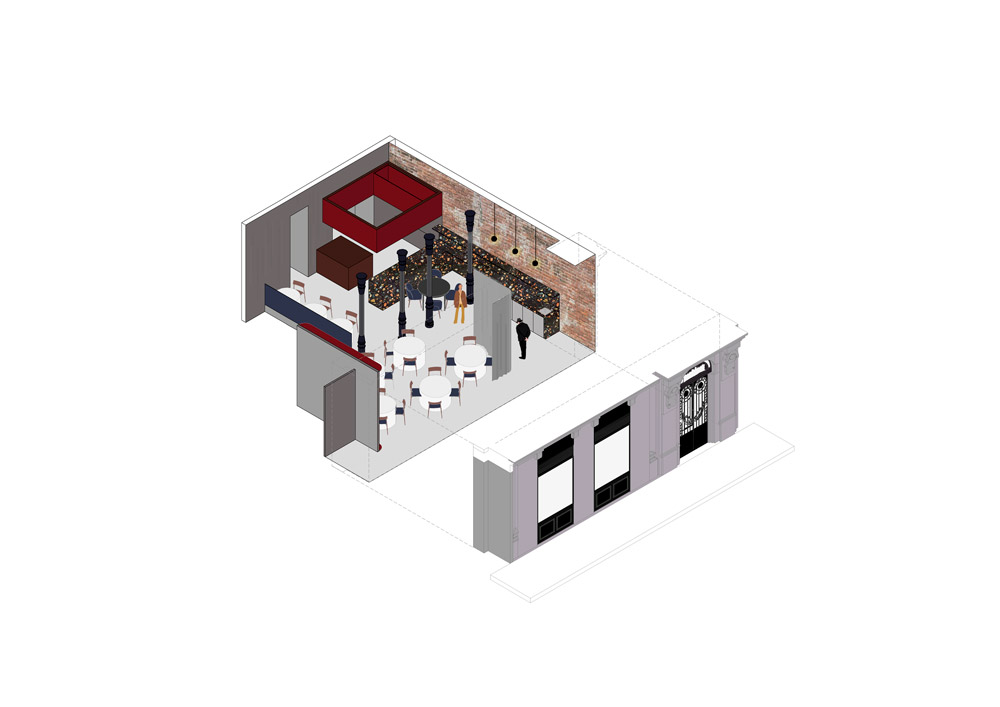
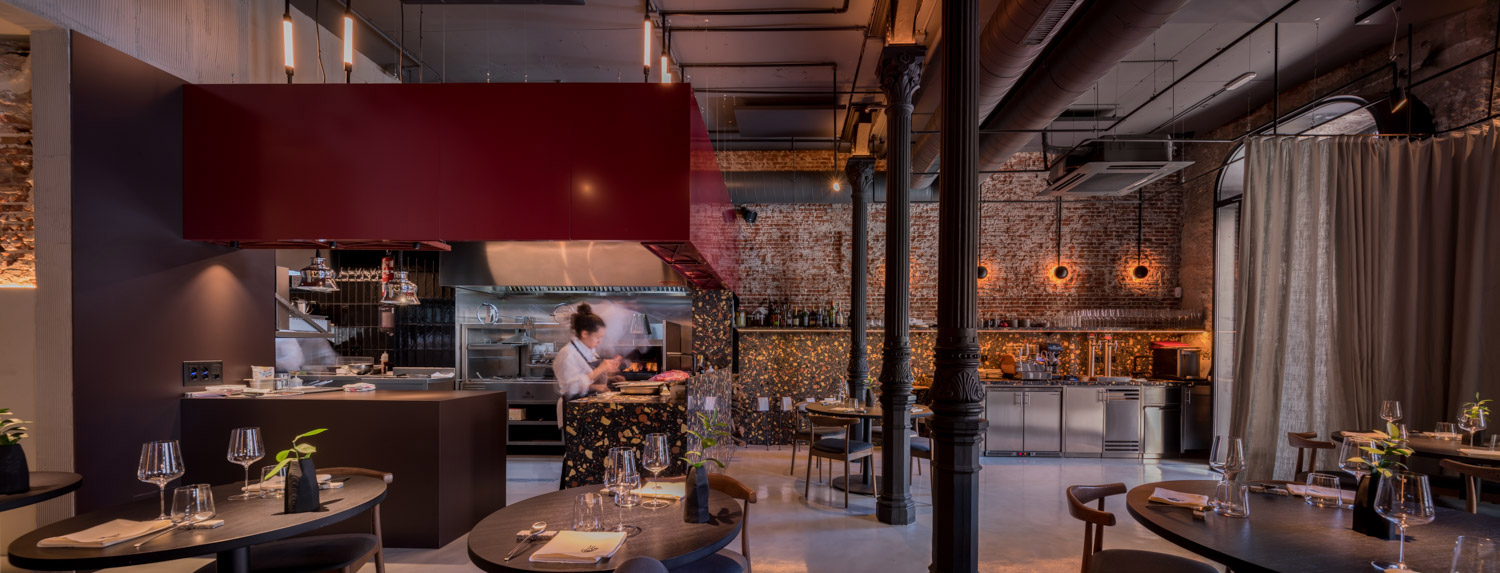
We looked for materials that reflect the passage of time. We chose a very characteristic terrazzo, formed from marble fragments, to build a continuous piece of furniture that has several uses: it delimits the grill area of the kitchen and organises, in the dining area, the storage of crockery, glassware and the waiters’ office. On the other hand, in the pass area, a continuous dark brown material forms a perfect base to give the finishing touches to each dish. Above them, a cherry-coloured suspended element floats, delimiting the kitchen space, closes it at the top and collects the lighting that is then distributed throughout the room, constructing a link of light common to the entire space. At the other end, and in the same colour, a wine cellar is designed that in turn integrates the two access doors to the service elements. These two elements operate as two chromatic poles that give dynamism to the room.
An important part of the project consists of including certain elements recognised as domestic, which will help to make the room a welcoming and pleasant environment. Textile elements then appear, the curtains, which organise the access to the restaurant and the corridor environment, as well as improving the acoustic conditioning. They are suspended from the ceiling at exactly the same height as the entire lighting grid.
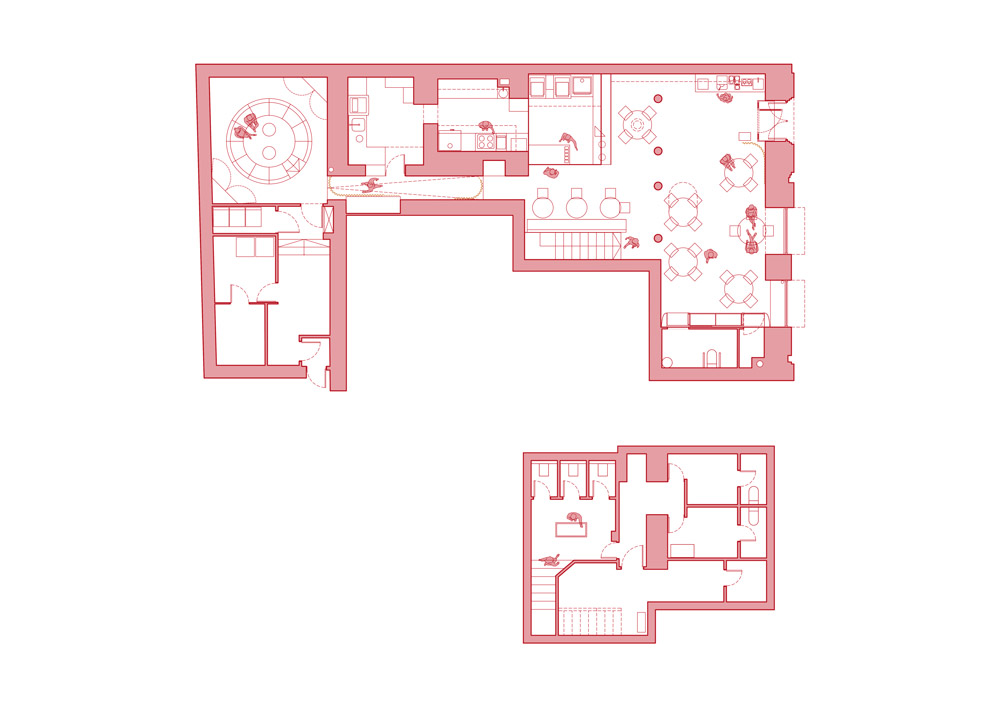
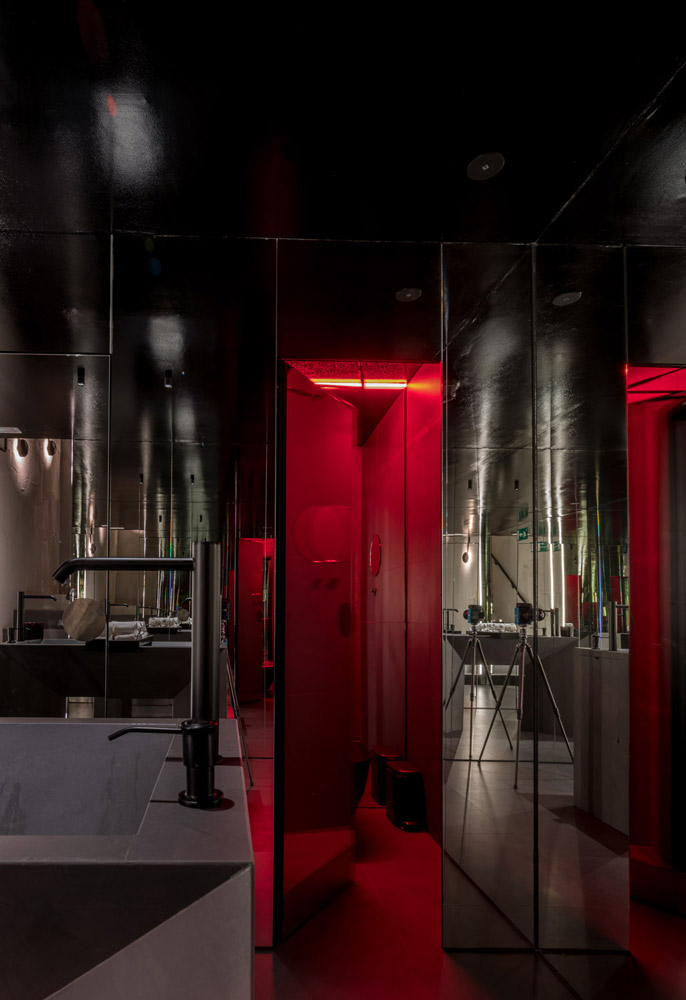
The asesos, located in the basement, were designed as a totally different space from the hall, a surprise. A hallway lined with mirrors and dim lighting conceals the booths, which when opened show their red light, the fire.
At the request of the chefs, all the tables had to be round, and all the guests had to be able to see into the kitchen. This bespoke furniture was made from dark wood and is spotlit, so that the food always takes centre stage. A large round mirror is placed on the staircase to act as a viewfinder for customers sitting with their backs to the kitchen.